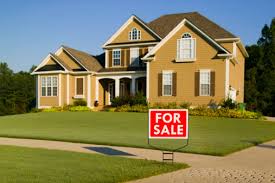
Basically, when someone buys a house, they don't usually pay for the whole house on the spot. What buyers can do is borrow money from lenders and banks to pay for the house, move in, and then start paying the money that they borrowed back to the lenders or banks at an interest rate determined by their credit score.
If the buyer has a high credit score, which means they have good credit, they can usually pay the money back off in a longer amount of time or at a lower interest rate, etc. If the buyer has low or bad credit, they traditionally would either not be able to borrow a lot of money from lenders or banks or would have to pay back their loans at a higher interest rate. Around 2005, lenders and banks willingly gave loans out to people with bad credit. This allowed for people that were once unable to buy or rent a house (those with bad credit) the ability to buy or rent houses. The loans that buyers with bad credit took out are called subprime loans.

Once this all happens, the economy experiences inflation. When the economy experiences inflation, the Federal Reserve then raises interest rates. This leads to a decrease in the demand for houses, less people want to buy houses. Meanwhile, many people try to sell their house in an effort to make money, however since the prices drop, many of their houses have depreciated in value. This chain effect is what is referred to as the "housing bubble burst." Not only does it effect the housing market, it also effects the economy greatly. This "burst" is what happened around 2007.
I hope this information has helped many of you and will help your understanding of my future posts on the current events that are surrounding this issue.

I agree that the housing bubble and overall condition of the housing market is one of the (if not the) largest problems in America’s economy today. Although we have undoubtedly seen worse recessions and bounced back even better than before, this one does seem to have us stumped. Is it because our economy is so complex that we cannot come up with a viable fix? Or is it that people and corporations are more dishonest and greedy than they have ever been, thus throwing off any real hopes of a real recovery? The question, how can we solve the economic crisis is one that obviously has economists and politicians perplexed. While we certainly have made some recovery from trough of the economic downturn, we certainly are nowhere near full recovery. Progress has been slow and generally misleading, making everyone frustrated and even somewhat desperate. We are listening to ideas that have no real backing or structure. We are resorting to un-American tactics like the big government bailouts and we really have nothing to show for it. While this all may appear to be somewhat cynical or biased, it is true that we have a long way to go to recover from the hardships we are experiencing today. I think reform and progress starts and ends in the housing market as well. The question is, how do we look through all of the political spin and agree on the steps necessary to move forward?...
ReplyDeleteThis is a very interesting topic! I have to admit I hear about the housing bubble nearly everyday, but I never understood all of the jargon used such as interesat rates, loans, credit score etc. You have explained very well! I wonder how long we will be suffering the side effects from the 2007 housing burst? Will you address a time frame for how long this will last? Is this something I should be worried about for when I graduate and move into the real world? I look forward to seeing this blog progress. Oh, what does the comic strip you inserted mean by "St. George or bust?"
ReplyDeleteIt's funny how I had always wanted to be a real estate agent because of all the money i heard they supposedly made. However, with worldwide economic crashes and the housing burst - most realtors are desperate to sell houses that no one wants to buy and consequently, there's high unemployment in the real estate industry - at least in the USA. I think policies should be enforced whereby loans made to people are managed - because had people with bad credit scores not been given hefty mortgage loans, then the crash of the housing market might not have occured. But regulating who to give loans would have been such a challenging task because America really operated on credits and loans. People buy things on credit daily, and the future is so unpredictable that the loan they thought they might have been able to pay off, wouldn't be possible to pay after all. Sometimes the circumstances for such situations are so unfortunate so the bank would have to ignoe the credit score of that individual and lend money to that person - so there the moral dilemma of whom to loan and whom not to loan sets in - and consequently in a bid to try to be as reputable and as impartial as possible - the bank is forced to lend to people with low credit scores.
ReplyDeleteYour topic is very interesting. I had heard about the housing bubble but never really understood the basis of the matter.
ReplyDeleteA few years ago my mom's friend (who is a real estate agent) and her husband (who is a builder) declared bankruptcy. Why? She could not sell her husband's multi-million dollar mansions because nobody could afford to even buy a normal sized home. I have homes in my neighborhood that have had "FOR SALE" signs up for a year or more already. The owners are long gone to their next destination, yet they are still sitting on this slab of land that just wont sell.
This is mainly due to the economic crisis in the US. Unemployment rates have skyrocketed, gas prices have skyrocketed, prices for nearly EVERYTHING have skyrocketed and nobody seems to have a valid solution.
I look forward to reading more of what you have to say on the housing crisis.