The implications of the housing crisis determines a lot of the future of America. If this situation is not resolved, it could result in drastic changes to the future of the world. Because of the gravity of this issue in relation to the world market, a lot of countries could be affected by the unchanging conditions. Not only would it affect the world, it would most importantly affect many different aspects of America. Unemployment, the economy, education, almost everything can be tied to the improvement or continual regression of the housing market.
If the housing market improves, people buying houses on good credit, less and less foreclosures and evictions, contractors building a fair amount of houses based on demand (not oversupplying) and a whole lot of other conditions, the American economy will improve along with it. In many cases, if the housing crisis improves, that will have meant that the economy has already improved. For example, employment might be going up, which results in more money for people and families, which might result in a higher demand for houses and real estate.
If the housing market declines even further, the issue will continue to be debated and argued over. Should government intervene and take a strong stance and action on the situation? Or should they allow the market to naturally come to a healing point and fix itself? This latter option is one that many economists, government officials, and consumers are scared about. If the situation does not improve, if foreclosures grow, houses decline in value, defaults and mortgages can't be paid, America will see very drastic changes. Loss of homes will lead to even more unemployment and companies going bankrupt (housing contractors, construction companies, interior designers, real estate agents, etc). An unimproved housing market will indefinitely result in a dire future for America, and the world at large.
Wednesday, October 27, 2010

Monday, October 25, 2010
3 Blogs YOU should read (after reading mine)
Based on all of the positive comments that my fans have left me, I realize many people probably read my blog daily. While I am grateful for everyone's support and readership, I would also like to recommend a few blogs that are also worth reading (in no particular order):
1. http://diggingfortrouble.blogspot.com/
This blog details the oil drilling issue that America and the world has been facing in recent times. This blog is extremely well researched and provides an interesting view and insight on a subject and topic that is typically dry and not very interesting. Gasoline prices affect everyone, even those who do not drive. This blog has information and insight that is applicable to many.
2. http://algaepoweringthefuture.blogspot.com/
This blog details an alternative source of energy and fuel that many people do not usually think of- algae. That in itself makes the blog very interesting and refreshing. Not only is there more information on the extremely modern and technologically advance topic of algae as a source of energy and fuel, there is also a lot of information about the different sides to the issue.
3. http://aactionined.blogspot.com/
This blog details a subject and topic that is very applicable and real for college students. Not only does it delve into the different facades of the issue of affirmative action, it also presents a lot of thought provoking posts that make readers (like myself) think and reflect. This blog is extremely interesting and relevant to almost everyone.
Foreclosure Crisis Update
A recent hot topic related to the housing crisis is the FORECLOSURE crisis. If you have read my previous posts, you would know that there are many houses that are currently in foreclosure.
Just to refresh your mind in case you forgot, foreclosure is when a person that lives in a house paying mortgage can no longer pay their mortgage (due to unemployment, loss of money, etc.) and so then the person is evicted, their rights and ownership of the house is taken away, and the bank or government possesses the property, usually auctioning the goods and furniture in it, and then selling it on the market typically for a much lower price than it was originally worth.
Anyways, the current crisis revolves around the fact that it was recently discovered that many buyers were given subprime loans very freely. The process to get loans for buying a house are supposed to be extremely hard and complicated. However, during the time of the housing boom and the expansion of the bubble, many firms, banks, and financial institutions gave out loans very leisurely and freely. Current investigations have revealed that the process was much easier, and even in many instances, racist in that people of certain races and socioeconomic classes were given harder to pay back subprime loans which in many ways is a setup for failure.
Based on this information, and this article, what do you think? Do you think financial institutions were greedy and racist or careless and shallow in their dealing with giving out subprime loans?
Just to refresh your mind in case you forgot, foreclosure is when a person that lives in a house paying mortgage can no longer pay their mortgage (due to unemployment, loss of money, etc.) and so then the person is evicted, their rights and ownership of the house is taken away, and the bank or government possesses the property, usually auctioning the goods and furniture in it, and then selling it on the market typically for a much lower price than it was originally worth.
Anyways, the current crisis revolves around the fact that it was recently discovered that many buyers were given subprime loans very freely. The process to get loans for buying a house are supposed to be extremely hard and complicated. However, during the time of the housing boom and the expansion of the bubble, many firms, banks, and financial institutions gave out loans very leisurely and freely. Current investigations have revealed that the process was much easier, and even in many instances, racist in that people of certain races and socioeconomic classes were given harder to pay back subprime loans which in many ways is a setup for failure.
Based on this information, and this article, what do you think? Do you think financial institutions were greedy and racist or careless and shallow in their dealing with giving out subprime loans?
Sunday, October 24, 2010
HOUSING THEORY
When broken down, the solution to the housing crisis of today can really be summed up into the degree of which the government should regulate the housing market.
On one side, there are many that believe the government should leave the housing market alone for a while. This theory, mainly held by Republicans, and currently, many Democrats, goes back to the ideals of French merchants when asked what the government should do to help them. They simply said "laissez-faire," which means "let us do," or "leave us be." This idea of a free government hand on the economy was also further explained by notable economists, George Whatley and Adam Smith.
On the other side, there is the theory that government should have a strong hand and influence on the economy and its markets and prices. This theory runs back to the idea of a command economy, which is when government controls the economy, and also socialism, which is an economic theory that says all means of production and businesses are publicly owned. While these ideas are more extreme, it is the backing to many of the ideas of mostly Democrats and Liberals. An example of this is the bailout of 2009. Because of the downward spiraling financial houses, the government intervened and gave bailouts to large financial institutions that needed them.
Just to clarify, by no means am I trying to say that all Republicans believe in free market economies and laissez-faire or that all Democrats believe government should take a stronger role in the economy. However, after dissecting the issue and the theories on what should be done, the two basic theories that surround the housing crisis really do come down to two polarizing ends of the spectrum. While the bailout of 2009 was an example of government intervention, the current policies surrounding the housing crisis are very much laissez-faire. The government is trying to walk the tightrope between having a hand in the economy, and letting it recover on its own.
On one side, there are many that believe the government should leave the housing market alone for a while. This theory, mainly held by Republicans, and currently, many Democrats, goes back to the ideals of French merchants when asked what the government should do to help them. They simply said "laissez-faire," which means "let us do," or "leave us be." This idea of a free government hand on the economy was also further explained by notable economists, George Whatley and Adam Smith.
On the other side, there is the theory that government should have a strong hand and influence on the economy and its markets and prices. This theory runs back to the idea of a command economy, which is when government controls the economy, and also socialism, which is an economic theory that says all means of production and businesses are publicly owned. While these ideas are more extreme, it is the backing to many of the ideas of mostly Democrats and Liberals. An example of this is the bailout of 2009. Because of the downward spiraling financial houses, the government intervened and gave bailouts to large financial institutions that needed them.
Just to clarify, by no means am I trying to say that all Republicans believe in free market economies and laissez-faire or that all Democrats believe government should take a stronger role in the economy. However, after dissecting the issue and the theories on what should be done, the two basic theories that surround the housing crisis really do come down to two polarizing ends of the spectrum. While the bailout of 2009 was an example of government intervention, the current policies surrounding the housing crisis are very much laissez-faire. The government is trying to walk the tightrope between having a hand in the economy, and letting it recover on its own.
Friday, October 22, 2010
Wednesday, October 20, 2010
Clarification
After reading some of the comments of readers of my blog, I feel the need to further explain, or answer some of what your questions and comments have been about.
While I explained some of the different schools of thought in my analysis post a few days ago, I now realize I didn't really apply, or explain the involvement of the different political parties of today's in the housing issue. This post will hopefully help clear that misunderstanding up.
In regards to the school of thought involving laissez-faire and a more free hand on the economy and housing prices and market from the government, the political party that would share these sentiments would be the Republican party. They believe in a free market and do not think government should intervene in the markets of different industries, housing included.
While the Democratic party on the other hand would traditionally be more adept to agreeing with the idea of government intervention. Historically, the Democratic party have advocated for government investment in the people.
However this current housing situation has brought the Democratic and Republican party in many ways together. While the bailout of 2009 was a Democratic backed legislation, many Republicans believed it really was the right thing to do to help the situation.
I hope this has cleared up a little bit of confusion!!
While I explained some of the different schools of thought in my analysis post a few days ago, I now realize I didn't really apply, or explain the involvement of the different political parties of today's in the housing issue. This post will hopefully help clear that misunderstanding up.
In regards to the school of thought involving laissez-faire and a more free hand on the economy and housing prices and market from the government, the political party that would share these sentiments would be the Republican party. They believe in a free market and do not think government should intervene in the markets of different industries, housing included.
While the Democratic party on the other hand would traditionally be more adept to agreeing with the idea of government intervention. Historically, the Democratic party have advocated for government investment in the people.
However this current housing situation has brought the Democratic and Republican party in many ways together. While the bailout of 2009 was a Democratic backed legislation, many Republicans believed it really was the right thing to do to help the situation.
I hope this has cleared up a little bit of confusion!!
Thursday, October 14, 2010
Analysis of the Housing Crisis
INTRODUCTION As stated in previous posts, the housing crisis is an issue that is extremely relevant to the American public today. While this blog mainly focuses on the issue of housing with respect to mortgages, foreclosures, and real estate, the actual subject at hand is one that is interdisciplinary with other topics that are relevant to all people in today's time. Not only does the housing crisis apply to the failures of banks, unemployment and the loss of jobs, and the depreciation in the value of stocks and bonds. It also led up to the hyperinflation of the American economy which transitively affected the world economy. However, regardless of how the issue of housing relates to every individual in the world, what is more relevant is how the issue can be resolved, or at least improved upon. There are many different ideas on how this situation can be resolved. However, before understanding these propositions, the different schools of thought on the housing crisis should be examined first.
THE OPTIMISTS- THE WORST IS OVER There are so many different ideas and theories on how the housing situation in America can be improved upon. Many people ask and believe, what is the problem exactly? Some optimistic financial firms have taken a "worst is over" stance in believing that the hard times are over and that the economy is stabilizing itself, which is also stabilizing the housing market, albeit at a slow and gradual rate. These optimists looked at the previously continuous downward slope of building permits and housing starts and noticed a small growth in their numbers.
THE OTHER OPTIMISTS There are also people on the same side of these optimists but with a different take on the situation, most notably, Todd Zywicki, a Professor of Law at George Mason University School of Law. Well known for his opinions on the situation, Zywicki believes that the housing crisis is not all that it has been reported to be by the media. His theory concludes that the "housing crisis" is merely a natural part of the cycle of real estate in general. While he does recognize the economic disparity of the housing bubble, Zywicki doesn't find the current economic situation to be one of "any tragedy." His support behind this conclusion is that there are three types of housing markets and only one of them is being truly affected by the housing bubble. In this type of housing market, Zywicki observed over speculation of the demand for houses in areas such as Miami, Las Vegas, and Tampa which led to the creation of a bubble as "prices moved up and speculators moved in." Because of this bubble, he suggests that the government should limit their interactions and involvement in the crisis and just let the market naturally take its course. This idea is what can be seen as a laissez-faire government reaction to the housing crisis.
THE LAISSEZ-FAIRE APPROACH Without going into detail about the fundamental principles of economics, the term laissez-faire basically refers to hands free government involvement in the economy. Another way to understand laissez-faire is understanding its antonym, command economy, which is when the government literally controls the economy. The ideas of laissez-faire boil down to the simple idea that the government should allow markets to naturally take its course because everything will balance out in the end. Transitively, certain optimist financial firms and theorists like Zywicki believe that the worst of the housing crisis is over and that in order for the economic crisis to improve, the government must involve itself as little as possible.
MORE WORK AND NO PLAY On the other end of the spectrum of what should be done about the crisis are those that believe government should take a stronger hand on the issue. There are a fewer number of people that think the government should have a stronger hand in the issue. The majority of these people formulated this opinion more early on in the housing crisis. Unfortunately, because this has been an issue for many years now, those voices of intervention have been heard and in 2009, Congress issued a bailout to Fannie Mae and Freddie Mac in order to help them out of their downward spiral. This bailout was the answer to many people's prayers. The government firms Fannie Mae and Freddie MacDemocrats as well as many whose house payments were on default. However, since the bailout, the opinion of many that once stood on the side of government intervention in the economy, especially the housing market, have "changed sides." would be safe from the deep hole of which they were falling dramatically deeper and deeper in. This drastic measure that was taken is a prime example of government intervention in the economy, also considered the opposite of laissez-faire.
THE GOVERNMENT RIGHT NOW The current administration doesn't fall too far from the laissez-faire tree of thought. Recent White House conferences have shed some light on the Obama administration's plan to back off a little with it's hand on the economy. While top officials are considering reducing their involvement in the housing situation, there are some key roles that the government are still not going to back down from such as insuring new home loans. "The Cabinet secretaries, who are leading the housing overhaul effort, said they envision a hybrid system that relies far more on private companies to provide funding for home loans but still features a government backstop for those loans." In other words, the government wants to let the natural laws of economics freely come into play, but at the same they also want to give some security to the firms and financial houses that want to "play freely."
AND LASTLY Through all of the different arguments and opinions on the housing crisis, there many points of which all sides can agree on. Something needs to be done. The home, jobs, and security of many Americans are and have been at stake as a result of this crisis have gone to undeniable highs. However, the two sides of this argument prove a hard line for Americans to straddle. Either time needs to go one for the housing market to get back to normal, according to the laissez-faire school of thought, or government needs to intervene even more in the affairs of the housing market. However, is it worth it to wait? Jobs and houses are lost daily. But on the other hand, would government intervention be successful or even constitutional? As the midterm elections are coming around the corner, it is your job to make a decision on how you want the situation to play out. The future of the housing market is in your hands.
Wednesday, October 13, 2010
The Housing Crisis EASILY Explained
To everyone who has had trouble understanding all of the different explanations of the housing crisis (including mine), I recently found a VERY easy to understand and read article, which can be found here.
The article does a great job of explaining the housing situation and the analogy of a bar and home-buyers really helped me simplify the crisis. Because of the different choices unemployed and employed Americans made in terms of their home-buying, many other Americans were also affected. Because of the increase of homes bought on bad credit, other people with bad credit also thought it would be ok for them to buy houses.
The last part of the explanation is one that is pretty interesting- "Fortunately though, the bank, the brokerage houses and their respective executives are saved and bailed out by a multi-billion dollar no-strings attached cash infusion from their cronies in Government. The funds required for this bailout are obtained by new taxes levied on employed, middle-class, non-drinkers who have never been in Heidi's bar." The bias in this line implies the view of the writer that they do not really care for the fact that the government bailout of 2008 was paid for by American taxpayers, some of which had nothing to do with the initial housing crash.
What do you think about the bailout? Should the government have bailed out the financial institutions with money paid for by taxpayers? What are your thoughts?
Thursday, October 7, 2010
Racial Loans
To add a little bit of a mood to this article, I've decided to add this song just for entertainment purposes. I also hope it will provide some deep thought about the situation discussed in this post.
I recently read this article on CBS news about recent information that has been discovered relating to the housing crisis. If you don't know what subprime loans are, read my previous blog and it will explain the term better.
I recently read this article on CBS news about recent information that has been discovered relating to the housing crisis. If you don't know what subprime loans are, read my previous blog and it will explain the term better.
In a country where racism should no longer be a government issue, the situation brought up in this article is alarming. Although this situation is not a direct implication of racism, it does have many signs of it. Statistics show that from 1993 to 2000, the share of subprime mortgages that went to minorities increased from 2% to 18%. Through the new information discovered by this study done by Princeton University, a whole new issue of what the causes of the housing crisis were have arisen.
While the traditional idea is that the housing bubble burst as a result of lender's risky loans that they made to those with bad credit, this article adds a level of responsibility to these financial institutions. There are many different sides to this argument.
On one side, people are making money. Yes, the subprime loans given to many people were not very ethical. However, in a time of which people saw short term money, not many people predicted the housing market would crash like it did. Therefore, many firms and companies gave out loans with the premonitions and intent of making money. This deed is not one of racism, but one of blind greed. The reason why it comes off right now as racism might be because of the demographic of the area of which these companies ran in. If all they're trying to do is make make money, and the market of which they sell to is predominately African-American, it would make sense that they would give a lot of subprime loans out to them, just like it would make sense if their market was predominately Caucasian. In other words, they might have been "in the wrong place at the wrong time."
On the other hand, maybe race did play into the situation. Maybe companies and firms had a racist intent going into the situation giving out subprime loans. The numbers don't lie, they did indeed give more foreclosures out to African Americans. Did they have failure in mind for these people?
With the economy in a bad state, so many houses are in foreclosure nowadays. Despite the speculation of whether or not these firms are being racist, the government should work towards improving the housing situation right now.
On one side, people are making money. Yes, the subprime loans given to many people were not very ethical. However, in a time of which people saw short term money, not many people predicted the housing market would crash like it did. Therefore, many firms and companies gave out loans with the premonitions and intent of making money. This deed is not one of racism, but one of blind greed. The reason why it comes off right now as racism might be because of the demographic of the area of which these companies ran in. If all they're trying to do is make make money, and the market of which they sell to is predominately African-American, it would make sense that they would give a lot of subprime loans out to them, just like it would make sense if their market was predominately Caucasian. In other words, they might have been "in the wrong place at the wrong time."
On the other hand, maybe race did play into the situation. Maybe companies and firms had a racist intent going into the situation giving out subprime loans. The numbers don't lie, they did indeed give more foreclosures out to African Americans. Did they have failure in mind for these people?
With the economy in a bad state, so many houses are in foreclosure nowadays. Despite the speculation of whether or not these firms are being racist, the government should work towards improving the housing situation right now.
Tuesday, October 5, 2010
Basic Background Information
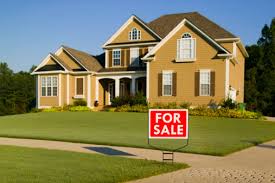
Basically, when someone buys a house, they don't usually pay for the whole house on the spot. What buyers can do is borrow money from lenders and banks to pay for the house, move in, and then start paying the money that they borrowed back to the lenders or banks at an interest rate determined by their credit score.
If the buyer has a high credit score, which means they have good credit, they can usually pay the money back off in a longer amount of time or at a lower interest rate, etc. If the buyer has low or bad credit, they traditionally would either not be able to borrow a lot of money from lenders or banks or would have to pay back their loans at a higher interest rate. Around 2005, lenders and banks willingly gave loans out to people with bad credit. This allowed for people that were once unable to buy or rent a house (those with bad credit) the ability to buy or rent houses. The loans that buyers with bad credit took out are called subprime loans.

Once this all happens, the economy experiences inflation. When the economy experiences inflation, the Federal Reserve then raises interest rates. This leads to a decrease in the demand for houses, less people want to buy houses. Meanwhile, many people try to sell their house in an effort to make money, however since the prices drop, many of their houses have depreciated in value. This chain effect is what is referred to as the "housing bubble burst." Not only does it effect the housing market, it also effects the economy greatly. This "burst" is what happened around 2007.
I hope this information has helped many of you and will help your understanding of my future posts on the current events that are surrounding this issue.
Subscribe to:
Posts (Atom)